Buy delicatessen.eu ?
We are moving the project
delicatessen.eu .
Are you interested in purchasing the domain
delicatessen.eu ?
domain@kv-gmbh.de · 0541-91531010
Buy delicatessen.eu ?
What are rotating Euglena?
Rotating Euglena are a type of single-celled organism that have a unique way of moving. They use a long, whip-like structure called a flagellum to rotate and propel themselves through their aquatic environment. This rotating motion allows them to move in a spiral path, giving them the ability to navigate towards sources of light or nutrients. Rotating Euglena are able to adjust the speed and direction of their rotation in response to environmental cues, helping them to survive and thrive in their habitats. **
What do Euglena and Chlorella feed on?
Euglena and Chlorella are both photosynthetic organisms that feed on sunlight, carbon dioxide, and water to produce their own food through the process of photosynthesis. They are autotrophs, meaning they can create their own energy from inorganic sources. Additionally, Euglena can also feed on organic matter and can behave like a heterotroph in the absence of sunlight. **


Similar search terms for Euglena
Top-Angebote
Products related to Euglena:
-
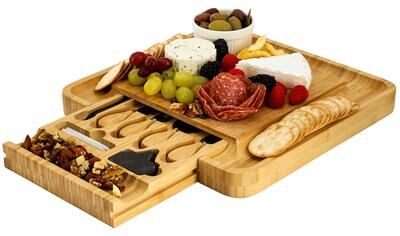
Gourmet Basics by Mikasa Mikasa Gourmet Basics Wine and Charcuterie Serving BoardHost in style with this Gourmet Basics Wine and Charcuterie Serving Board. Beautifully crafted of durable acacia wood, this stunning board is an easy way to serve wine, appetizers, cheese, and more.46,79 $*Shipping: 0,00 $Secure redirect to the provider
-
Zodax Rezi Polished Marble Cheese & Charcuterie BoardA solid slab of white marble with its smooth, substantial design features a round shape accentuated by natural, unique marble veining, the Rezi Cheese Board is minimalist in their design, but serves as a diverse kitchen tool.157,50 $*Shipping: 0,00 $Secure redirect to the provider



-
Can someone help me with Biology, Euglena gracilis?
Yes, I can help you with information about Euglena gracilis. Euglena gracilis is a single-celled, photosynthetic organism that belongs to the phylum Euglenozoa. It has a unique feature called a pellicle, which is a flexible outer covering that allows it to change shape. Euglena gracilis can be found in freshwater environments and is known for its ability to move towards light using a light-sensitive spot called a stigma. If you have any specific questions about Euglena gracilis, feel free to ask! **
-
How does the feeding process occur in the species of eye animals Euglena?
Euglena is a single-celled organism that can photosynthesize like a plant and also feed on organic matter like an animal. The feeding process in Euglena occurs through a structure called the stigma, which is a light-sensitive spot that helps the organism detect light for photosynthesis and also helps it locate food. When Euglena detects organic matter, it uses its flagellum to move towards the food source and engulfs it through a process called phagocytosis. Once the food is engulfed, it is enclosed in a food vacuole where it is digested and the nutrients are absorbed. This process allows Euglena to obtain energy from both sunlight and organic matter. **
-
Can someone please tell me if the depicted Euglena is a living organism and why?
Yes, the depicted Euglena is a living organism. Euglena is a single-celled organism that exhibits characteristics of living organisms, such as movement, reproduction, and response to stimuli. It also contains a nucleus and other organelles necessary for life processes. Therefore, it is classified as a living organism. **
-
Why are antipasti called antipasti?
The term "antipasti" comes from Italian, where "anti" means "before" and "pasti" means "meals" or "courses." Therefore, "antipasti" literally translates to "before the meal" or "before the courses." This name reflects the traditional Italian practice of serving small, flavorful dishes before the main meal to stimulate the appetite and prepare the palate for the upcoming courses. Antipasti typically include a variety of cured meats, cheeses, olives, and marinated vegetables. **


Why is Euglena a special case in the realm of animal and plant single-celled organisms?
Euglena is a special case in the realm of single-celled organisms because it exhibits characteristics of both animals and plants. Like plants, it contains chlorophyll and is capable of photosynthesis, but like animals, it can also move and feed on organic matter. This unique combination of characteristics blurs the line between animal and plant single-celled organisms, making Euglena a special case in the classification of microorganisms. **
How is antipasti stored?
Antipasti is typically stored in the refrigerator to keep it fresh. It should be kept in a sealed container or covered with plastic wrap to prevent it from drying out or absorbing other odors from the fridge. Some antipasti, such as marinated vegetables or cured meats, can also be stored in airtight jars or vacuum-sealed bags to maintain their flavor and texture. It's important to follow any specific storage instructions provided for the particular type of antipasti you have. **
Top-Angebote
Products related to Euglena:
-
Twine Rustic Farmhouse: Gourmet Cheese KnivesThe Rustic Farmhouse Gourmet Cheese Set is a beautiful collection of four assorted cheese tools. With stainless steel blades and rustic elegant acacia wood handles, this handsome set is perfect for entertaining, gift-giving and picnics!23,09 $*Shipping: 0,00 $Secure redirect to the provider
-
Gourmet Basics by Mikasa Mikasa Gourmet Basics Wine and Charcuterie Serving BoardHost in style with this Gourmet Basics Wine and Charcuterie Serving Board. Beautifully crafted of durable acacia wood, this stunning board is an easy way to serve wine, appetizers, cheese, and more.46,79 $*Shipping: 0,00 $Secure redirect to the provider
-
What are rotating Euglena?
Rotating Euglena are a type of single-celled organism that have a unique way of moving. They use a long, whip-like structure called a flagellum to rotate and propel themselves through their aquatic environment. This rotating motion allows them to move in a spiral path, giving them the ability to navigate towards sources of light or nutrients. Rotating Euglena are able to adjust the speed and direction of their rotation in response to environmental cues, helping them to survive and thrive in their habitats. **
-
What do Euglena and Chlorella feed on?
Euglena and Chlorella are both photosynthetic organisms that feed on sunlight, carbon dioxide, and water to produce their own food through the process of photosynthesis. They are autotrophs, meaning they can create their own energy from inorganic sources. Additionally, Euglena can also feed on organic matter and can behave like a heterotroph in the absence of sunlight. **
-
Can someone help me with Biology, Euglena gracilis?
Yes, I can help you with information about Euglena gracilis. Euglena gracilis is a single-celled, photosynthetic organism that belongs to the phylum Euglenozoa. It has a unique feature called a pellicle, which is a flexible outer covering that allows it to change shape. Euglena gracilis can be found in freshwater environments and is known for its ability to move towards light using a light-sensitive spot called a stigma. If you have any specific questions about Euglena gracilis, feel free to ask! **
-
How does the feeding process occur in the species of eye animals Euglena?
Euglena is a single-celled organism that can photosynthesize like a plant and also feed on organic matter like an animal. The feeding process in Euglena occurs through a structure called the stigma, which is a light-sensitive spot that helps the organism detect light for photosynthesis and also helps it locate food. When Euglena detects organic matter, it uses its flagellum to move towards the food source and engulfs it through a process called phagocytosis. Once the food is engulfed, it is enclosed in a food vacuole where it is digested and the nutrients are absorbed. This process allows Euglena to obtain energy from both sunlight and organic matter. **
Similar search terms for Euglena
-
Zodax Rezi Polished Marble Cheese & Charcuterie BoardA solid slab of white marble with its smooth, substantial design features a round shape accentuated by natural, unique marble veining, the Rezi Cheese Board is minimalist in their design, but serves as a diverse kitchen tool.157,50 $*Shipping: 0,00 $Secure redirect to the provider
-
Can someone please tell me if the depicted Euglena is a living organism and why?
Yes, the depicted Euglena is a living organism. Euglena is a single-celled organism that exhibits characteristics of living organisms, such as movement, reproduction, and response to stimuli. It also contains a nucleus and other organelles necessary for life processes. Therefore, it is classified as a living organism. **
-
Why are antipasti called antipasti?
The term "antipasti" comes from Italian, where "anti" means "before" and "pasti" means "meals" or "courses." Therefore, "antipasti" literally translates to "before the meal" or "before the courses." This name reflects the traditional Italian practice of serving small, flavorful dishes before the main meal to stimulate the appetite and prepare the palate for the upcoming courses. Antipasti typically include a variety of cured meats, cheeses, olives, and marinated vegetables. **
-
Why is Euglena a special case in the realm of animal and plant single-celled organisms?
Euglena is a special case in the realm of single-celled organisms because it exhibits characteristics of both animals and plants. Like plants, it contains chlorophyll and is capable of photosynthesis, but like animals, it can also move and feed on organic matter. This unique combination of characteristics blurs the line between animal and plant single-celled organisms, making Euglena a special case in the classification of microorganisms. **
-
How is antipasti stored?
Antipasti is typically stored in the refrigerator to keep it fresh. It should be kept in a sealed container or covered with plastic wrap to prevent it from drying out or absorbing other odors from the fridge. Some antipasti, such as marinated vegetables or cured meats, can also be stored in airtight jars or vacuum-sealed bags to maintain their flavor and texture. It's important to follow any specific storage instructions provided for the particular type of antipasti you have. **
* All prices are inclusive of VAT and, if applicable, plus shipping costs. The offer information is based on the details provided by the respective shop and is updated through automated processes. Real-time updates do not occur, so deviations can occur in individual cases. ** Note: Parts of this content were created by AI.